CALIFORNIA STATE UNIVERSITY FRESNO
LOCKOUT TAGOUT PROGRAM
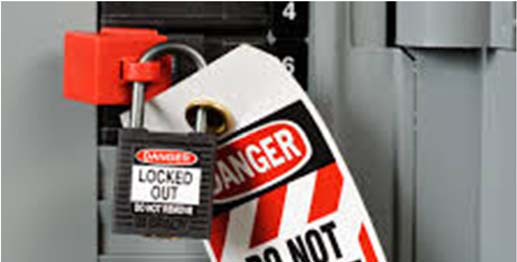
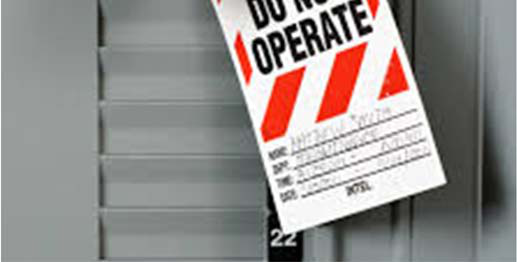
February 2019
California State University Fresno
Lockout Tagout Program
- 1.0 Regulatory Authority 1
- 2.0 Policy 1
- 3.0 Purpose 1
- 4.0 Scope and Application 1
- 5.0 Definitions 2
- 6.0 Lockout Tagout Procedures 4
- 6.1 Preparation for Shutdown 4
- 6.2 Application of Lockout Tagout 4
- 6.3 Preparation for Re-Energization 4
- 6.4 Removal of Lockout Tagout 5
- 6.5 Temporary Removal of Lockout Tagout 5
- 6.6 Emergency Lock Removal of Lockout/Tagout 5
- 6.7 Lockout Tagout Devices 5
- 7.0 Responsibilities 6
- 7.1 Supervisors 6
- 7.2 Authorized Employees 6
- 7.3 Affected Employees 7
- 7.4 Environmental Health and Safety/Risk Management 7
- 8.0 Employee Training 7
- 9.0 Outside Contractors 8
- 10.0 Recordkeeping 9
- 11.0 Lockout Tagout SOP templates 9
References:
CFR Title 29 Section 1910.147
CCR Title 8 Section 2320.1-2320.9
CCR Title 8 Section 3314
Lockout / Tagout Program
1.0 REGULATORY AUTHORITY
Code of Federal Regulations, 29 CFR 1910.147; California Code of Regulations, Title 8, Sections 2320.1-2320.9 & 3314; California State University, Fresno Injury and Illness Prevention Program.
2.0 POLICY
It is the policy of California State University, Fresno to maintain, insofar as is reasonably possible, a campus environment for faculty, staff, students and the public that will not adversely affect their health and safety nor subject them to avoidable risks of accidental injury or illness. Furthermore, the University has an obligation to safeguard employees from hazardous energy while they are performing service or maintenance on machines and equipment.
3.0 PURPOSE
Hazardous energy appears in the workplace in the form of electrical, mechanical, pneumatic, hydraulic and thermal energy and includes chemical, water, steam and gaseous energy systems. Lockout/Tagout procedures prevent the unexpected energization, start up or release of stored energy that could cause injury to employees working on equipment.
The purpose of this program is to identify the practices and procedures necessary to shut down and lock out or tag out machines and equipment. It also requires that employees receive training in the Lockout/Tagout program before they are authorized to perform service and maintenance requiring Lockout/Tagout.
4.0 SCOPE AND APPLICATION
This program applies to all University departments whose employees’ service or maintain equipment and machines which could either unexpectedly start up, or who work in areas where the possibility of the release of stored energy could cause injury. This includes authorized employees who perform repair, service and maintenance operations and affected employees who work with the equipment to be locked or tagged out.
This program does not apply in the following situations:
- Servicing or maintaining of cord and plug connected electrical equipment. Cords should remain unplugged and under the supervision of the employee throughout the operation.
- During hot tap operations that involve transmission and distribution systems for gas, steam or water when they are performed on pressurized pipelines. Hot tap operations must have an approved specific SOP in place prior to performing the operation.
- When employees are provided with an alternative type of protection that is equally effective.
Note: See CSUF Electrical Safety Program for additional information on electrical applications of Lockout/Tagout.
5.0 DEFINITIONS
Affected Employee: Any person (faculty, staff, employee, or student) who operates or maintains equipment that may be locked/tagged out. Also, any person who works in an area where equipment is being serviced.
Authorized Employee: Any qualified person (faculty, staff, employee, or student) who locks/tags out specific machines or equipment in order to perform cleaning, repairing, servicing setting up, adjustment operations, or maintenance. Authorized Persons must initially complete Lockout/Tagout training and will receive equipment-specific training and certifications, when required.
Capable of Being Locked Out: An energy-isolating device is capable of being locked out if it has a hasp or other means of attachment to which, or through which, a lock can be affixed or it has a locking mechanism built into it. Other energy-isolating devices are capable of being locked out, if lockout can be achieved without the need to dismantle, rebuild, or replace the energy-isolating device or permanently alter its energy control capability.
De-energization: Parts are de-energized when the working potential is completely depleted, discharged, or has returned to a non-hazardous state.
Energy: (includes, but is not limited to)
Chemical energy – flammable or reactive: i.e. natural gas, propane
Electrical energy – potentially hazardous voltage (>50 volts), hazardous static electrical potentials, or may be stored in a capacitor.
Mechanical energy – moving links, bars, chains, belts, sliders, wheels, shafts, gates, rams, blades, pistons, etc.
Potential or stored energy – pressure (above ambient pressure) vacuum (below ambient pressure), gravity, springs, batteries, or capacitors.
Electromagnetic energy – radio waves, microwaves, infrared, ultraviolet, x-rays and high-level magnetic fields.
Energy Control Point: The single point at which hazardous energy flow can be effectively and positively blocked so that it can no longer cause injury or loss of resources. There may be more than one Energy Control Point on a tool.
Energy Control Procedure:
Specific Steps for shutting down and isolating hazardous energies.
Procedures for applying, removing, and transferring Lockout/Tagout devices.
Requirement for testing a machine/piece of equipment to determine and verify the effectiveness of Lockout/Tagout procedures.
Energy-Isolating Device: A mechanical device that physically prevents the transmission or release of energy. Examples of energy-isolating devices are a manually operated circuit breaker, a disconnect switch, a valve, a mechanical blocking device, or any similar device used to block or isolate hazardous energy.
Energized: Connected to an energy source or containing residual or stored energy.
Impracticable: A Lockout Tagout that cannot be performed due to equipment, engineering or work environment difficulties that would increase the potential hazard to employees who perform the Lockout Tagout or equipment or process design that does not allow for isolation of hazardous energy. This does not include convenience or production impact.
Lockout: The placement of a physical restraint energy-isolating device, which ensures that the equipment cannot be operated or release a hazardous energy.
Lockout Device: A device that utilizes a positive means such as a lock to hold the energy-isolating device in the safe position and prevent the energization of a machine or equipment. Included are blank flanges and bolt slip blinds. The Federal OSHA regulation specifies that the lockout device must be substantial so that it cannot be easily removed or defeated without excessive force or unusual techniques. (e.g. bolt cutters, hacksaw).
Lockout: A device that attaches to a hazardous energy control point that provides the lockout function of an actual locking device, yet enables multiple users to attach their individual locks. Typical devices have the capability to attach 6 or more additional locks.
Lock Box: An approved box or container into which a key or set of keys could be placed. Lock boxes shall be substantial enough to prevent entry without the use of excessive force or unusual techniques; such as with the use of bolt cutter or other metal cutting tools. Lock boxes must be capable of being locked out with a hasp or other means of attachment to which, or through which, a lock and/or lockout scissors can be affixed.
Servicing and Maintenance: Any scheduled or unscheduled activity that, when complete, will enable the machine to perform its intended function; such as constructing, installing, setting up, adjusting, inspecting, demobilizing, modifying, and maintaining and/or servicing machines or equipment.
Standard Operating Procedure (SOP): A specific procedure applied to a specific device to be used in substitution for this Lockout/Tagout policy.
Tagout: The placement of a warning/identification tag on an energy-isolating device to indicate that the equipment must not be operated. Identifies the person who applied the lock/tag.
Tagout Device: Must include Employee's Name, warning against hazardous condition if the machine or equipment is energized and a legend such as the following: “Do Not Start, Do Not Open, Do Not Close, Do Not Energize, Do Not Operate Wires, tie wraps, or cords shall be used for securing the tags to the energy control point and must be able to withstand 50 lbs. of force.”
6.0 LOCKOUT/TAGOUT PROCEDURES
6.1 Preparation for Shutdown
- Obtain the Lockout/Tagout devices and tags.
- Affected employees shall be notified by a supervisor or an authorized employee of the application and removal of the lockout devices or Tagout devices. Notification shall be given before the controls are applied, and after they are removed from the machine or equipment.
- Read and understand the equipment-specific standard operating procedure.
- Locate each energy control point on the equipment.
- Power down the equipment.
- Isolate the equipment from all hazardous energies sources.
6.2 Application of Lockout/Tagout
- Apply the Lockout/Tagout device so that it locks the energy-isolating device in the SAFE position. Affix the tag directly to each lock.
- Dissipate, drain, or safely release any stored or residual energy in the system after Lockout.
- Verify that all sources of hazardous energies have been isolated. This should be done by measuring the energy with a meter or gauge and by trying to start the equipment. Prior to using the meter/gauge, ensure it is functioning properly. Be sure to return all switches to the SAFE position after testing.
6.3 Preparation for Re-Energization
- Inspect the work area to ensure that all nonessential items, tools, etc., have been removed from the danger zone.
- Check that all the guarding and safety controls have been properly replaced.
- Notify affected employees and ensure that all personnel are in a safe location before re-energization.
6.4 Removal of Lockout/Tagout
- Remove the Lockout/Tagout locks and tags.
- Re-energize the equipment according to start-up procedures in SOP.
6.5 Temporary Removal of Lockout/Tagout
- Clear equipment of tools and materials.
- Remove affected Employees from equipment area.
- Remove Lockout/Tagout devices.
- Energize and proceed with testing or positioning.
- De-energize all systems and reapply energy control measures in accordance with procedures.
Note: In situations in which Lockout/Tagout devices must be temporarily removed from the energy isolating device and the equipment energized to test or position the equipment, follow the steps above.
6.6 Emergency Lock Removal of Lockout/Tagout
Only the employee that locks and tags out machinery, equipment or processes may remove his/her lock and tag. However, should the employee leave the facility before removing his/her lock and tag, the Department Manager may remove the lock and tag. The Department Manager will use the Emergency Lock Removal Form (Appendix A) and assure that all tools have been removed, all guards have been replaced and all Employees are free from any hazard before the lock(s) and tag(s) are removed and the machinery, equipment or process is returned to service. The employee who placed the lock shall be physically accounted for prior to lock removal.
6.7 Lockout/Tagout Devices
In most instances, a lockout device is preferable to a tag because tags do not present a physical restraint to the startup of equipment. Tags are warning devices which can be easily removed, bypassed, obscured or ignored. When a tag is used, further steps should be taken to ensure that procedures are safely carried out.
The following are requirements for Lockout/Tagout devices:
- Departments are responsible for providing employees with a sufficient number of devices for control of hazardous energy.
- Lockout/Tagout devices must be used only for controlling energy and shall not be used for other purposes.
- Lockout/Tagout devices must be capable of withstanding the environment for the period of time they will be applied. Tagout devices must be constructed and printed so that the exposure to weather, wet conditions or corrosive environments will not alter the tag or make it unreadable.
- Locks utilized for the Lockout/Tagout process are standardized in that all locks are to be the same shape. All locks utilized by University employees are to be square in shape. Different colors may be used for different shops and/or shifts. Tagout devices are standardized in that all University employees are to utilize separate tags that are able to withstand the outdoor elements.
- Lockout devices must be sturdy enough to prevent removal without the use of excessive force. Tagout devices must be sturdy enough to prevent inadvertent or accidental removal. Tagout attachment devices must be non-reusable and self-locking.
- Lockout/Tagout devices must indicate the identity of the employee applying the device. Tagout devices shall warn against hazardous conditions if the machine or equipment is energized and shall include warnings such as “Do Not Open, Do Not Close, Do Not Operate, etc.”
7.0 RESPONSIBILITIES
7.1 Supervisors
- Ensure that only authorized employees, who are qualified and trained, apply and remove locks and tags. Ensure that employees who are found to have insufficient skills or understanding of Lockout/Tagout requirements do not perform Lockout/Tagout and are retrained.
- Implement, manage, and audit personnel for conformance with the Lockout/Tagout Program.
- Ensure that all safety equipment is stocked, stored, and maintained in a state of readiness and is available for employee use.
- Ensure that any deficiencies or deviations found in the working procedures are corrected.
- Ensure all employees are properly trained in Lockout/Tagout procedures.
- Develop specific SOPs for equipment as needed.
7.2 Authorized Employees:
- Shall perform Lockout/Tagout activities that are in conformance with this policy.
- Retain control of the equipment, system or machinery while a Lockout/Tagout is in progress and work only under their own lock and tag.
- Maintain Lockout/Tagout hardware and tags in good condition.
- Complete all training required to be authorized to work with specific equipment, tool(s) or machinery.
7.3 Affected Employees
- Be aware and knowledgeable of the intent and requirements of the Lockout/Tagout Program.
- Complete required training.
- Be knowledgeable of energies associated with the equipment.
7.4 Environmental Health and Safety/Risk Management (EH&S/RM)
- Works with management to ensure compliance with this document and all other regulatory requirements.
- Assists in developing specific SOPs as needed.
- Ensures a system is in place to properly train employees.
- Reviews campus program periodically to ensure the content of this document and employee practices are current with OSHA regulations and maintain audit documentation.
- Communicates the expectations of this guideline to contractors as appropriate.
8.0 EMPLOYEE TRAINING
The Departments will be responsible to provide training to ensure the purpose and function of the Lockout/Tagout program is understood by all authorized and affected employees. EH&S/RM will be available to assist the Departments in providing training.
8.1 Training
Training on the purpose, content and function of the Lockout/Tagout program is required for all employees who participate in or are affected by the Lockout/Tagout of equipment. Training can be obtained through department-specific training or by attending training offered by EH&S/RM. Records must be kept showing training dates, attendance, items covered, and trainer.
8.2 Authorized Employees
Authorized Employees are those who have received proper training and have been “authorized” by their department to apply Lockout/Tagout devices when necessary. Training for authorized employees shall include:
- 1 The recognition of locations, types and magnitudes of potential hazardous energy sources in the work area.
- 2 Proper Lockout/Tagout procedures.
- 3 Proper use of Lockout/Tagout devices (and any related equipment) used by the department.
- 4 Lockout/Tagout device removal.
- 5. How to deal with special conditions.
8.3 Affected Employees
Affected Employees are those employees affected by the shut down or who work in areas where equipment is being serviced/maintained. Training for Affected Employees shall include:
- Purpose and use of the Lockout/Tagout procedures
- How to recognize Lockout/Tagout equipment
- Prohibition on tampering with Lockout/Tagout equipment
8.4 Retraining
Retraining is required whenever:
- There is a new or revised energy control procedure,
- An Authorized Employee's job duties change (regarding Lockout/Tagout),
- The Lockout/Tagout Program is changed,
- Additional Lockout/Tagout hazards arise, such as new equipment, modified processes, or the use of different Lockout/Tagout devices,
- Periodic inspections show employee deficiencies in energy control techniques.
9.0 OUTSIDE CONTRACTORS
9.1 Employees who oversee outside servicing personnel (i.e., contractors), are responsible for:
- Informing outside contractors about Lockout/Tagout procedures.
- Ensuring outside contractors provide information about their Lockout/Tagout procedures.
- Informing supervisors of affected employees, about the outside employer's Lockout/Tagout procedures.
9.2 Supervisors are responsible for informing affected employees under their supervision about outside contractors Lockout/Tagout procedures.
9.3 Where construction projects require access to equipment, Environmental Health & Safety/Risk Management and supervisors who are familiar with the equipment are responsible for:
- Informing contractor oversight personnel of all such equipment during the design phase of the project (provided they are involved in the preconstruction process).
- Working with contractor oversight personnel throughout the construction phase to assure that qualified employees familiar with the equipment are working with contractor personnel to fulfill the requirements of this program.
10.0 RECORDKEEPING
All University Lockout/Tagout Program records will be maintained by the individual departments. The records must include:
- Specific Lockout/Tagout Standard Operating Procedures for equipment covered by the program.
- Employee attendance sheets and training summaries.
11.0 Lockout Tagout SOP templates
The following pages are sample LOTO templates that are encouraged to be used on campus. In 2018 Fresno State purchased access to a UC Program pilot rebranded “CSU Safety – Procedures” for Fresno State use. This system of authoring and documentation of LOTO procedures is currently optional as is the included template below.
- To access “CSU Safety Procedures” all employees can:
- Login at: https://csu.risksafety.solutions/procedures/
- Or by using the app:
Simplified Sample LOTO Template:
California State University Fresno
Lockout/Blockout Standard Operating Procedure (SOP)
Equipment – Specific Template Instructions
Note Only one SOP is required for identical equipment set up in an identical configuration.
The template includes the following required sections:
- Signatures – Employee who completes the procedure should sign and date, then take the procedure to his/her supervisor for review and signature. If the supervisor has questions regarding any elements of the procedure, these should be taken to the next level manager and Environmental Health & Safety. The supervisor shall keep a copy of the completed form on file, and the original will be kept by the employee performing the work.
- Section A: Procedure Purpose – No additional information is required in this section.
- Section B: Equipment Description – Enter the building and room where the equipment is located. The equipment description should include enough detail to uniquely identify the specific piece of equipment covered by this procedure. If the equipment has an existing identification tag or number, this should be noted. Examples of equipment identification include, “Motor powering pump P-2”, “Air Handler located in southwest corner of the room”, etc.
- Section C: Hazardous Energy Assessment – Identify hazardous energy to which you may be exposed during your servicing work. Example:
| Type of Energy | Type / Magnitude | Danger Zone | Isolation Point(s) |
|---|---|---|---|
| Electrical- low voltage (50-600 V) - list amperage | 480VAC 3 phase 100 amp service |
Wiring connection points in motor housing junction box | Disconnect adjacent to motor on right hand side. |
- Section D: Preparation and Notification
Step 1, Preparation: Identify group lockouts, authorized personnel, and shift changes.
Step 2, Notifications: Notify and record affected employees (example: department technician who will lose compressed air when compressor is shut down).
Step 3, Equipment Shutdown: List equipment shut down procedure (note: this is NOT the lockout procedure, this is just the steps to stop and shut down the machine/equipment).
- Section E: Steps for Controlling Hazardous Energy Identified in Section C
For EACH energy source / isolation point identified in Section C, complete the applicable information. Example:
Energy source description: 480 VAC 3 phase 100 amp service
Isolate: Switch disconnect to “off”
Control: Apply lock and tag to disconnect
Dissipation: N/A
Verify zero energy state appropriate to the type of hazardous energy involved: Check voltage at wiring connection point on motor
- Section G: Steps to Return to Service
Refer to Lockout/Blockout Program manual for general instructions.
California State University Fresno
Lockout/Blockout Standard Operating Procedure
Author
Employee who completed this form (print name & sign) date
This document has been reviewed and approved by
Supervisor (print name & sign) date
Section A. Procedure Purpose
The purpose of this procedure is to identify all hazardous energies and hazardous energy isolation points and list all required steps to safely shut equipment down and return it to service after work is completed.
Failure to follow this lockout procedure may result in injury to personnel or damage to equipment and may result in disciplinary action, up to and including termination.
Section B. Equipment Description
Equipment Location: Building: Room Number:
Equipment Description:
California State University Fresno
Lockout/Blockout Standard Operating Procedure
Section C: Hazardous Energy Assessment
Evaluate the equipment for all hazardous potential energy sources and check the left hand box if present. For each, describe the type and magnitude, danger zone (the part(s) of the equipment where the energy is found), and isolation points. Note: Describe how to control each identified hazardous energy source in Section F.
| Types of Energy | Type / Magnitude | Danger Zone | Isolation Point(s) | |
|---|---|---|---|---|
| □ | Electrical - low voltage (<50 V) - list amperage | |||
| □ | Electrical - low voltage (50-600 V) - list amperage | |||
| □ | Electrical - high voltage (>600 V) - list amperage | |||
| □ | Pressure - hydraulic, pneumatic > 150 psi in rigid pipe 50 psi in flexible, unsecured lines |
|||
| □ | Mechanical - capable of crushing, pinching, cutting, snagging, striking | |||
| □ | Thermal - high temperature-surface temperature, hot liquids, steam Liquids or gases > 125°F (52°C) Surfaces ≥ 140°F (60°C) |
|||
| □ | Stored energy - flywheel, springs, differences in elevation, capacitors, batteries, etc. | |||
| □ | Emergency power - does the equipment maintain an emergency power/uninterruptible power supply? | |||
| □ | Other - describe |
California State University Fresno
Lockout/Blockout Standard Operating Procedure
Section D: Preparation and Notification
Step 1. Is this a Group Lockout? □ Yes □ No
If “yes” list all authorized employees working under this lockout:
Primary Authorized Employee:
Other Authorized Employees:
Will this lockout span a shift change? □ Yes □ No
If “yes” then supervisor or manager must sign this section confirming that the following shift has been notified of the presence of the lockout and the need to place their locking devices at the energy control point before working on the locked out equipment:
Name of Supervisor/Manager:
Signature of Supervisor/Manager:
Step 2. Notify
Prior to starting work, notify affected workers of the lock out activity.
Employees notified:
Step 3. Shut equipment down steps:
California State University Fresno
Lockout/Blockout Standard Operating Procedure
Section E. Steps for Controlling Hazardous Energy Identified in Section C
Energy source description:
Isolate:
Control:
Dissipation:
Verify zero energy state appropriate to the type of hazardous energy involved:
Energy source description:
Isolate:
Control:
Dissipation:
Verify zero energy state appropriate to the type of hazardous energy involved:
Energy source description:
Isolate:
Control:
Dissipation:
Verify zero energy state appropriate to the type of hazardous energy involved:
Energy source description:
Isolate:
Control:
Dissipation:
Verify zero energy state appropriate to the type of hazardous energy involved:
California State University Fresno
Lockout/Blockout Standard Operating Procedure
Section G: Steps to Return to Service
- Step 1. Verify equipment and area is clear of tools, workers, equipment, materials, and debris.
- Step 2. Unlock and remove any blocking devices; remove linkages.
- Step 3. Reposition any safety devices, guards, interlocks.
- Step 4. Warn workers to stay clear of area.
- Step 5. Remove all locks and tags for energy control points.
- Step 6. Verify affected areas are clear of personnel.
- Step 7. Re-energize the equipment. Note: be certain to consider effects of re-energization on all systems “downstream” of energy source.
- Step 8. Notify supervisor when work is complete.
- Step 9. If you find any errors in this procedure, or have suggestions on how to improve it, provide your comments to your supervisor.
California State University Fresno
Lockout/Blockout Standard Operating Procedure
Revision History
| Revision | Date | Revised By | Description |
|---|---|---|---|
| 1 | 2/13/19 | M. Burgess | Added revision history page, mention of “CSU Procedures” as an optional LOTO documentation method and embedded the most recent previous template that is available for use as a template for LOTO. Also an erroneous reference to emergency lock removal, and renamed “attachments” reference to “references” at the end of the Table of contents. This was not a full review, only a targeted update. |
This HTML version was generated with AI assistance and may contain errors or omissions. The original approved PDF remains the official document of record. An alternative accessible format is available upon request from the document creator in accordance with Title II of the ADA.